
With the first frosts of the year occurring, the earlier and earlier nights, and the last of the leaves beginning to drop, our thoughts naturally turn towards winter.Most people consider our mid-atlantic winters devoid of life and that is a fair assumption based on the witnessable preparations of our deciduous treescape, but life is still all around us – whether hibernating, finding new ways to survive this cold new world, or staging it’s re-emergence.In some rare cases life is occurring in all of its grandest theater, as is the case with our marbled salamanders (Ambystoma opacum). Each fall, as the weather begins to cool, this native (and nearly statewide) salamander begins to court, mate, and lay their eggs!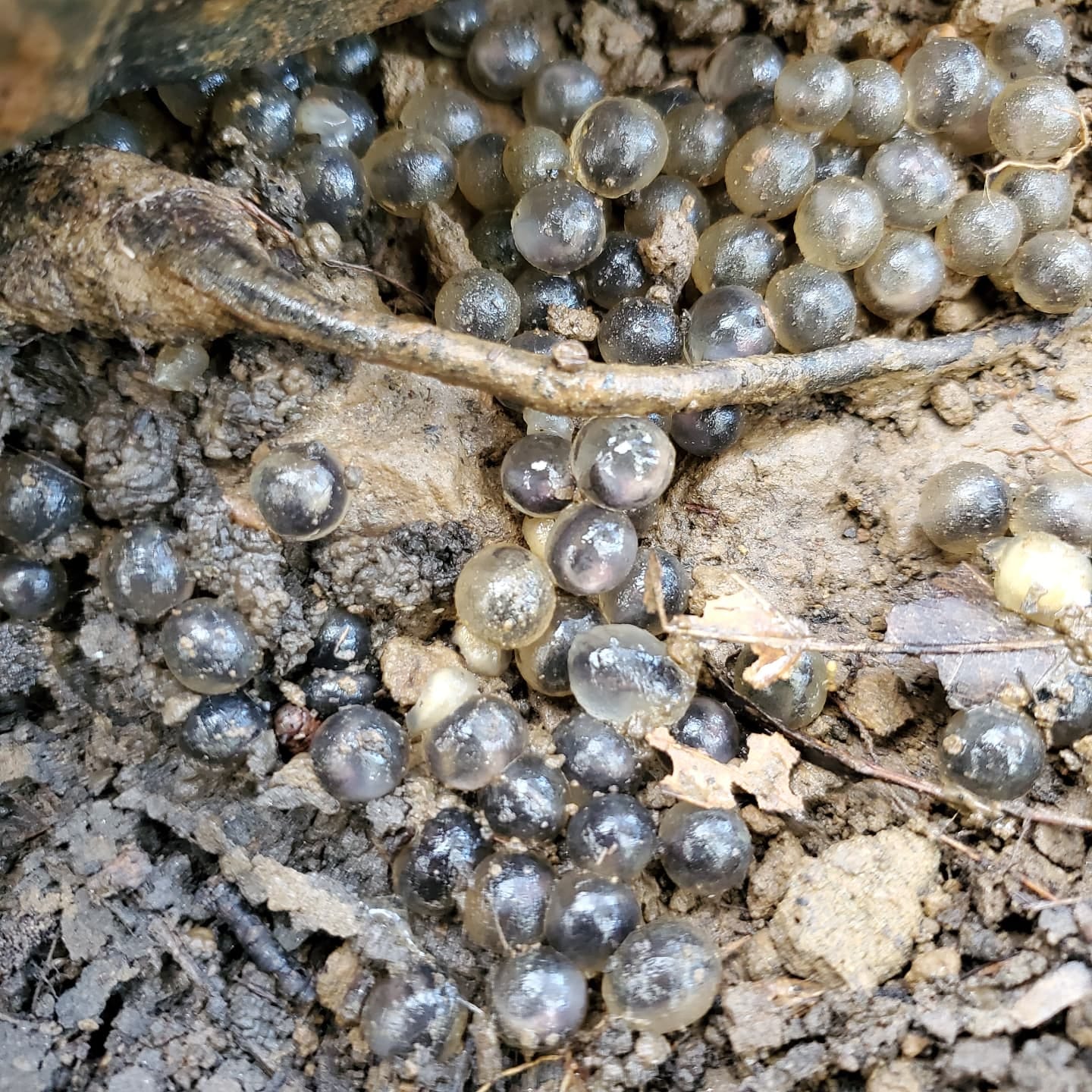

Similar Posts
VOF celebrates Black History Month with special programs at Bull Run Mountains
Barinaale Dube, VOF’s Cultural History Interpreter, leads a Black History Hike at the Preserve. Even though February is recognized as African American History Month, the on-going work at Bull Run Mountains honors the historic Black and African American residents far beyond 28 days out of the year. From the Black history hikes hosted by our…
Ode to a fallen friend
Located at our confluence, our beloved beech was the definition of a trooper.Its root system half pulled out of the Earth by a windstorm decades ago and its trunk since laying horizontally across Catlett’s Branch. Despite this waterlogged existence, it continued to hang on and keep-on-keeping-on for more than a decade.Sadly, its time had come…
Discover the Catletts Trail
New Blue Trail opens this weekend at Bull Run Mountains Natural Area Preserve.
Folk Life in the Bull Run Mountains: an Introduction to our Folk History Intern and her approach to studying an iconic mountain figure
Annie Mickum, a native of The Plains, brings her Culture and Media Studies background to the Preserve to research folk history, centering on the life of Jack Dawson.
Celebrating United Nation’s International Women and Girls in Science Day
Join us in celebrating the women and girls integral to our science program here at BRMNAP! This year, we are highlighting our 2020 Natural Science Fellow, Meredith Hart, who studied our insect biodiversity, contributing to our greater understanding of our ecosystems and biodiversity.
What is Black History?
What we now recognize as Black History Month, began as Negro History Week in 1926. It was first celebrated spanning the week of February 7th, so that it would encompass the birthdays of both Frederick Douglass (February 14th) and Abraham Lincoln (February 12th). The holiday we enjoy today, was born in the mind of Carter…


